Perlis
Tun Dr Mahathir Highlights Perlis Entrepreneurs Embracing New Business Models
Published
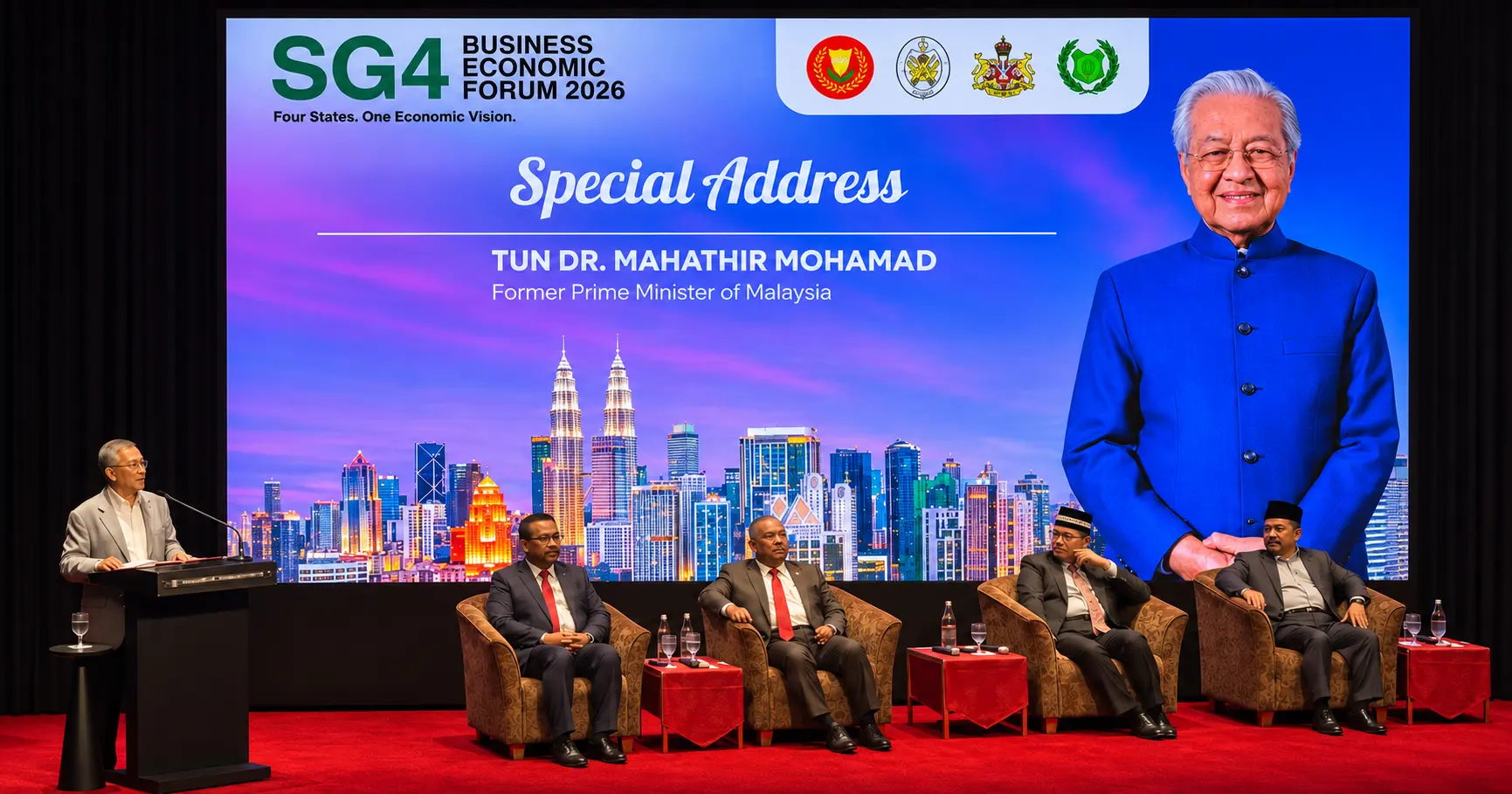
Tun Dr Mahathir Mohamad highlighted cafés and homestays as examples of local enterprise in Perlis, describing them as signs that people are exploring new business models. In a special keynote address delivered on his behalf by Tan Sri Mokhzani Mahathir at the SG4 Business & Economic Forum 2026, he noted that younger operators in particular are introducing modern hospitality and food concepts across the state.
His observations connected these grassroots ventures with wider questions about business viability, market demand and economic support. For Perlis, where traditional livelihoods have centred on agriculture and small-scale trade, the emergence of lifestyle cafés and community accommodations reflects an entrepreneurial community seeking to capture growing domestic leisure travel.
Cafés and Homestays Featured in His Remarks on Perlis
In his keynote address, Tun Dr Mahathir pointed out that entrepreneurship in Perlis is increasingly visible in the hospitality and food and beverage sectors.
Quaint countryside cafés overlooking limestone hills and paddy fields, alongside refurbished village homestays, have become popular destinations for domestic travellers and road-trippers exploring the northern corridor. These businesses demonstrate initiative, creativity and an ability to capitalise on the natural scenic landscape of Perlis.
However, as Tun Dr Mahathir observed, starting a business is only the initial step. Ensuring that a café or homestay remains financially viable through off-peak seasons requires disciplined planning, cost control and an understanding of underlying consumer demand.
New Business Models Require a Clear Customer Proposition
Introducing contemporary business concepts to smaller regional markets requires careful alignment with target customers:
| Business Question | What an Operator Can Assess | | --- | --- | | Who is the intended customer? | The needs and spending patterns of local residents versus interstate visitors | | What does the business offer? | The distinct menu, ambience or cultural experience customers are paying for | | Does the pricing support the business? | Product costs, overhead margins and the volume of customers required to break even | | How do customers find the business? | Online map listings, social media engagement and local word-of-mouth visibility | | What are the operating overheads? | Commercial rent, utility expenses, staffing costs and inventory wastage |
Addressing these questions helps operators move beyond short-lived social media trends to build enduring commercial operations.
Sustainable Growth Includes Understanding Demand
A common risk for emerging hospitality clusters is rapid market saturation. When a specific concept proves popular, multiple similar establishments often open in close proximity, dividing existing patronage.
Sustainable enterprise growth relies on product differentiation. A homestay might combine accommodation with guided agro-tours or traditional cooking classes, while a café might feature locally roasted coffee or regional seasonal produce. Broadening the offering helps build steady year-round revenue.
Better Market Access Helps Customers Make Decisions
Independent businesses in regional areas often face challenges connecting with customers traveling from major urban centres. Providing clear, reliable practical information bridges this gap:
| Customer Need | Information the Business Can Provide | | --- | --- | | Finding the business | Accurate location pins, driving directions and on-site parking details | | Understanding the offer | Representative photographs, up-to-date menus and transparent price lists | | Assessing the price | Clear charges, service inclusions and accepted payment methods | | Making a reservation | A dependable booking channel, prompt message response or direct phone line | | Planning the visit | Operating hours, seasonal opening schedules and nearby attractions |
Maintaining accurate digital listings across search engines and navigation apps allows independent operators to compete effectively for traveler patronage.
Collaboration Can Bring More Local Businesses into the Experience
Individual small businesses often gain greater visibility by collaborating rather than competing in isolation.
A café, a homestay, an orchard owner and a craft artisan in a single village can form informal commercial networks, cross-promoting each other's services to visitors. Coordinated packages—such as weekend retreats incorporating accommodation, dining and local cycling—keep visitors in the area longer and distribute economic benefits across multiple families.
Business Support Should Match the Operator’s Needs
To help grassroots enterprises navigate commercial risks, business development support should target specific operational stages:
| Area of Support | Possible Focus | | --- | --- | | Business planning | Target customer selection, pricing structure and cash-flow management | | Digital information | Search engine verification, photography guidance and booking systems | | Service delivery | Hygiene compliance, hospitality standards and customer service training | | Market understanding | Tracking seasonal demand patterns, visitor feedback and footfall data | | Partnerships | Facilitating partnerships with tourism agencies and regional tour operators |
By providing targeted guidance in these areas, regional enterprise development agencies can help small operators build sustainable commercial foundations.
Local Enterprise Within the SG4 Economic Discussion
The attention given to cafés and homestays at the SG4 Business & Economic Forum 2026 illustrates that regional economic development encompasses both major industrial projects and community enterprise.
While large-scale investments in SG4’s four-state economic collaboration build physical infrastructure and industrial parks, local businesses provide daily economic participation, vibrant community spaces and immediate services for visitors and residents alike.
Conclusion
Tun Dr Mahathir’s reflections on Perlis entrepreneurs underscore the potential of service and hospitality ventures to bring fresh vitality to northern communities.
By combining entrepreneurial initiative with sound business models, reliable digital visibility and collaborative local networks, small business operators in Perlis can turn contemporary concepts into lasting, sustainable livelihoods.
Frequently Asked Questions
What businesses did Tun Dr Mahathir highlight in Perlis?
He highlighted modern cafés and homestay accommodations as clear examples of local entrepreneurs adopting contemporary business models in Perlis.
Did his keynote provide figures for the number of cafés and homestays?
The address did not provide a statistical count. His remarks used these businesses as practical examples to discuss the shift toward service and experiential enterprise.
What support did he suggest for local businesses?
He called for institutional support to assist operators in navigating business risks, refining operating concepts and managing costs for long-term viability.
How do Dr Ahmad Samsuri’s remarks relate to these businesses?
Dr Ahmad Samsuri highlighted market access, operational competitiveness and family income as core measures of whether economic growth genuinely benefits local entrepreneurs.
Are the support measures in this article official SG4 programmes?
The tables describe practical operational frameworks and suggestions for enterprise development. Formal support schemes are administered by respective state and federal agencies.