Terengganu
3 Industrial Strengths Terengganu Brings to SG4
Published
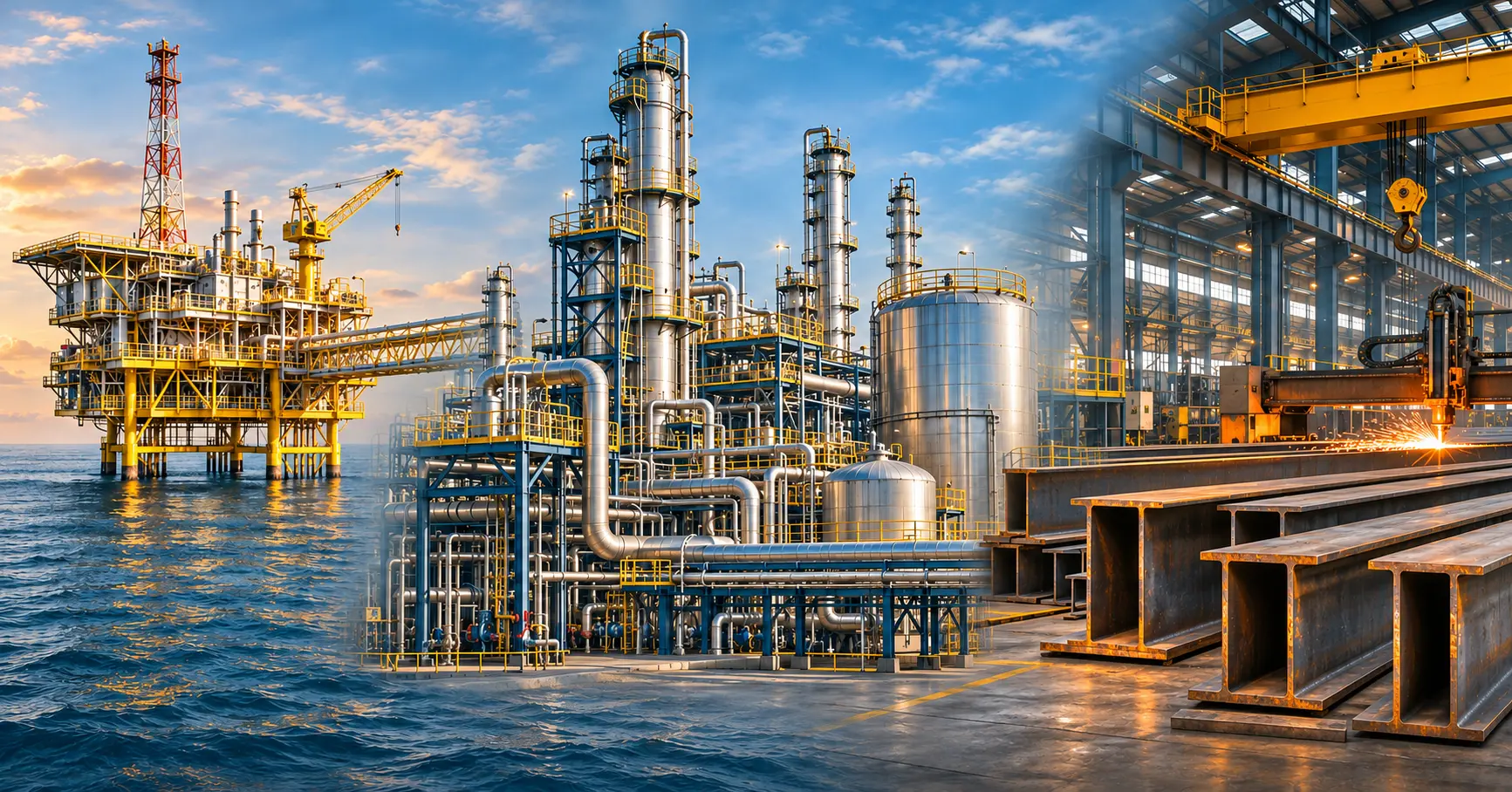
Oil and gas, petrochemicals and heavy industry are three established industrial strengths Terengganu brings to SG4. In remarks at the SG4 Business & Economic Forum 2026, Menteri Besar Dato' Seri Dr Ahmad Samsuri Mokhtar highlighted these sectors as foundational elements of the state's economic structure.
For the wider four-state collaboration involving Kedah, Kelantan, Terengganu and Perlis, Terengganu's heavy industrial assets provide specialized processing capabilities, energy resources and deepwater maritime access. Understanding how these three sectors operate offers practical insights into where regional supply chains and investment opportunities can expand.
1. Oil and Gas Provides an Established Industrial Foundation
Offshore oil and gas extraction has anchored Terengganu's modern industrial economy for more than four decades.
The infrastructure supporting this sector includes offshore production platforms, subsea pipelines, crude oil terminals and gas processing facilities along the Kemaman and Kerteh coastline. This complex requires continuous operational support, ranging from structural fabrication and underwater inspection to instrumentation and environmental testing.
In his keynote address at the SG4 forum, Tun Dr Mahathir Mohamad observed that while extraction remains vital, the long-term strategic priority for petroleum-rich states is building domestic capabilities around processing and technology. Developing specialized services around existing energy infrastructure allows local firms to participate beyond raw commodity extraction.
2. Petrochemicals Connect Resources with Processing
Building directly on natural gas and petroleum feedstocks, Terengganu established Malaysia's first dedicated petrochemical complex in Kerteh.
Petrochemical plants convert ethylene, propylene, methane and aromatic hydrocarbons into polymers, synthetic resins and industrial chemicals. These intermediate materials serve as essential inputs for packaging, automotive parts, construction materials and consumer goods manufactured across Southeast Asia.
For regional enterprises seeking to assess supply opportunities in the petrochemical value chain, several commercial factors are critical:
| Area to Assess | Business Consideration | | --- | --- | | Technical capability | Ability to meet the customer’s specifications | | Quality systems | Consistency, inspection and documentation | | Workforce | Relevant technical knowledge and practical experience | | Logistics | Reliable movement of materials and products | | Commercial capacity | Resources to support contracts and ongoing operations |
Meeting these operational standards enables specialized local vendors to secure contracts for plant turnarounds, catalyst handling, piping fabrication and specialized safety services.
3. Heavy Industry Adds Production and Technical Capabilities
Terengganu's third major industrial pillar comprises heavy engineering, metal fabrication and specialized marine manufacturing.
Centred around the Teluk Kalong industrial estate and Kemaman Port, heavy fabrication yards build complex offshore jackets, topside modules, pressure vessels and industrial steel structures. These yards combine heavy lifting equipment, waterfront load-out facilities and a concentration of certified welders, non-destructive testing technicians and project engineers.
The presence of heavy manufacturing capabilities creates opportunities for regional supply networks, linking steel suppliers, machine shops and logistics providers across the eastern corridor.
How the Three Industries Relate to One Another
Terengganu's key industries do not operate in isolation; they form an integrated industrial ecosystem where each sector supports and draws from the others.
| Industrial Strength | Role in the Discussion | Relevant Development Question | | --- | --- | --- | | Oil and gas | Resource and energy-related capabilities | How can supporting skills and businesses participate? | | Petrochemicals | Processing and industrial materials | Where can additional value be developed through processing? | | Heavy industry | Production assets and technical operations | What capabilities are needed to support reliable industrial activity? |
This integration creates resilience: primary energy extraction feeds petrochemical converters, while heavy fabrication yards build and maintain the mechanical infrastructure required by both processing plants and offshore operators.
Regional Cooperation Depends on Practical Connections
Within the broader SG4 framework, Terengganu's industrial strengths can complement the priorities of neighbouring states.
As Kedah expands its semiconductor and high-tech manufacturing parks, Kelantan develops mineral exploration and cross-border commerce, and Perlis strengthens inland logistics, Terengganu offers established heavy engineering and chemical feedstocks. Coordinated regional planning can connect Terengganu's energy and chemical outputs with manufacturing consumers across the other member states.
As Dr Ahmad Samsuri explained at the forum, practical economic cooperation relies on identifying where the physical strengths of one state can support the growth ambitions of another.
Turning Industrial Strength into Opportunities for Local Firms
For Malaysian SMEs, the presence of major industrial clusters in Terengganu offers a clear pathway for commercial expansion. Entering these supply chains requires deliberate preparation:
- What can the business deliver consistently? Evaluating internal production thresholds and identifying core technical competencies.
- What does the customer require? Reviewing vendor qualification standards, safety track records and mandatory compliance certifications.
- What needs to improve? Upgrading equipment, investing in workforce skills and implementing audited quality assurance systems.
By addressing these practical questions, local businesses can position themselves as dependable tier-2 and tier-3 suppliers to the primary operators shaping Terengganu's industrial landscape.
Conclusion
Oil and gas, petrochemicals and heavy engineering represent foundational economic pillars that Terengganu contributes to the SG4 platform.
By connecting these established capabilities with regional workforce training, infrastructure development and cross-state supply networks, Terengganu reinforces its position as a vital industrial hub driving long-term economic growth across Peninsular Malaysia's northern and eastern states.
Frequently Asked Questions
What are Terengganu’s key industries in SG4?
Dr Ahmad Samsuri highlighted oil and gas, petrochemicals and heavy industry as three core industrial pillars Terengganu brings to the four-state platform.
What did Tun Dr Mahathir say about Terengganu’s petroleum sector?
In his SG4 forum keynote, Tun Dr Mahathir described Terengganu as having significant petroleum activities, highlighting downstream development as an avenue for industrial expansion.
How do petrochemicals relate to oil and gas?
Petrochemical activities process oil- or gas-derived feedstocks into basic chemicals, polymers and industrial compounds used in manufacturing.
How can local businesses participate in these industries?
Businesses can assess where their products, services and technical capabilities meet the quality, safety and procurement criteria of industrial operators.
What role could SG4 play?
Dr Ahmad Samsuri described cooperation that connects industry with energy, logistics, technology and workforce preparation across the four member states.